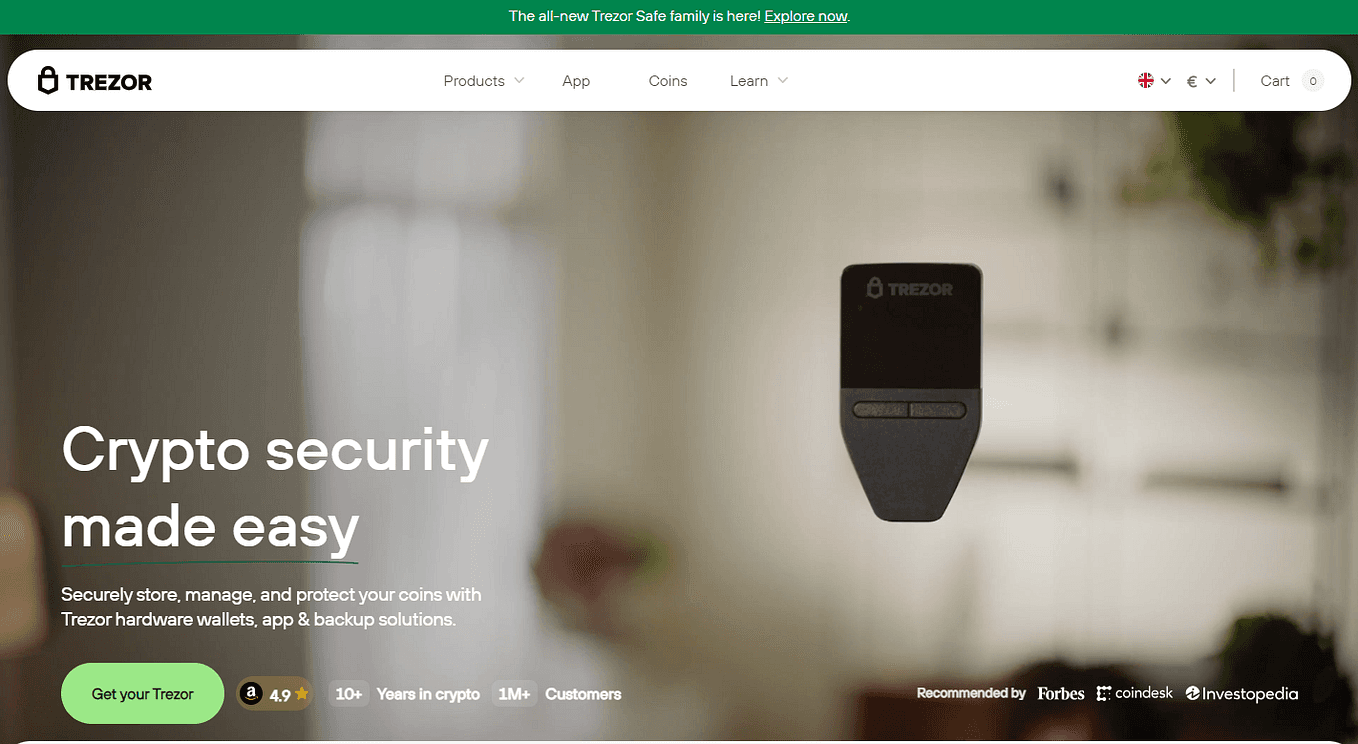
Introduction to Trezor Hardware Wallets
In the ever-evolving world of cryptocurrencies, security is a top priority for anyone involved in digital asset management. A hardware wallet, like Trezor, offers one of the safest ways to store and manage your cryptocurrency. In this guide, we will walk you through the process of getting started with Trezor by using the official Trezor.io/start website, offering a step-by-step guide to help you set up your wallet with ease.
What is a Trezor Wallet?
Trezor is a hardware wallet that provides secure storage for cryptocurrencies such as Bitcoin, Ethereum, Litecoin, and many others. It allows you to store your private keys offline, making them less vulnerable to hacking or malware compared to software wallets that are connected to the internet.
Trezor offers two models: Trezor One and Trezor Model T. Both devices are designed to ensure your cryptocurrency is safe from online threats and unauthorized access. The Trezor wallet is a trusted solution in the cryptocurrency community, providing peace of mind for both beginners and experienced crypto users alike.
Getting Started with Trezor: Visit Trezor.io/start
The official website for setting up your Trezor wallet is Trezor.io/start. This site guides you through the entire process of initializing your device, securing your recovery seed, and syncing your wallet to manage your cryptocurrencies. Here’s how to get started:
1. Purchase a Trezor Device
Before you can use the Trezor wallet, you need to purchase one. The official Trezor store or authorized resellers is the best place to buy a genuine device. This ensures that your Trezor device has not been tampered with during shipping.
Once you've bought a Trezor hardware wallet, ensure that the packaging is intact and that there are no signs of tampering before opening it.
2. Connect Your Trezor Wallet to Your Computer
After unboxing your device, the first step is to connect it to your computer using the provided USB cable. Make sure that your computer is running the latest version of its operating system, and that all required updates are completed.
Once you connect the Trezor wallet to your computer, navigate to Trezor.io/start using your preferred web browser.
3. Access the Trezor.io/start Website
The Trezor.io/start website is the central hub for setting up your Trezor wallet. On this website, you'll find all the necessary tools and instructions to get your device ready for use. The website is user-friendly and walks you through the process step by step.
4. Download the Trezor Bridge
To allow your computer to communicate with the Trezor hardware wallet, you will need to install the Trezor Bridge. The Trezor Bridge is a piece of software that creates a connection between your Trezor device and the Trezor website, enabling you to interact with your wallet.
Follow the on-screen instructions to download and install the Trezor Bridge. Once it is installed, the website should automatically detect your Trezor device.
5. Setting Up Your Trezor Wallet
Once your Trezor wallet is detected, you’ll be prompted to start the setup process. Follow these instructions carefully to initialize your device:
Step 1: Create a PIN Code
You will be asked to create a PIN code for your Trezor wallet. This PIN will be required each time you connect your device to your computer. Choose a PIN that is secure and memorable. Avoid using easily guessable numbers like “1234” or “0000.”
Step 2: Generate a Recovery Seed
One of the most crucial steps in setting up your Trezor wallet is generating a recovery seed. This seed is a list of 12, 18, or 24 words that act as a backup for your wallet. If you ever lose your Trezor device, or it is damaged, the recovery seed allows you to recover your funds.
Important:
Write down the recovery seed on paper and store it in a secure location. Do not store it digitally (e.g., on your phone or computer) to prevent potential hacks.
Do not share your recovery seed with anyone, as it grants access to your funds.
You will be asked to confirm the recovery seed by selecting the words in the correct order.
Step 3: Finalizing Setup
Once the PIN and recovery seed are successfully set up, your Trezor wallet will be ready for use. At this point, you can install additional security features such as passphrase protection, which adds an extra layer of security to your wallet.
Managing Your Cryptocurrencies with Trezor
With the Trezor wallet properly set up, you can begin using it to manage your cryptocurrencies. Whether you want to receive, send, or check your balance, Trezor makes the process simple and secure.
1. Receive Cryptocurrency
To receive cryptocurrencies, click on the "Receive" option in the Trezor web interface. You will be provided with a unique receiving address. This address can be shared with anyone who is sending you funds. Make sure to double-check the address before sharing it to ensure there are no errors.
2. Send Cryptocurrency
To send cryptocurrency from your Trezor wallet, you need to select the "Send" option. Enter the recipient's address and the amount of cryptocurrency you wish to send. You will be prompted to verify the transaction on your Trezor device, ensuring that you are the one initiating the transaction.
3. View Your Balance
To view the balance of your cryptocurrency holdings, simply navigate to the “Accounts” section in the Trezor web interface. Your available balance will be displayed in the currency of your choice.
Securing Your Trezor Wallet
Security is the primary reason many people choose Trezor. To ensure that your wallet remains secure, consider the following tips:
1. Use Strong PINs and Passphrases
Your PIN code is the first line of defense against unauthorized access. Make sure it is unique and not easily guessable. Additionally, you can set up a passphrase to further protect your wallet. The passphrase is an extra word or phrase that you will enter each time you connect your device.
2. Enable Two-Factor Authentication (2FA)
Trezor supports two-factor authentication (2FA) for added security when interacting with exchanges or other services. It’s highly recommended to enable 2FA on all of your accounts to reduce the risk of unauthorized access.
3. Store Your Recovery Seed Safely
The recovery seed is the key to accessing your funds if your device is lost or damaged. Store the seed in a secure, offline location—preferably in a fireproof and waterproof safe. Consider storing multiple copies in different locations for added safety.
4. Regularly Update Your Trezor Firmware
Trezor regularly releases firmware updates that enhance the security and functionality of your wallet. Make sure to check for firmware updates periodically and install them as soon as they become available.
5. Use a Secure Computer
While Trezor provides hardware-level security, using a computer infected with malware can compromise your private keys. Make sure the computer you use is free from malware and has proper security software installed.
Trezor Wallet Supported Cryptocurrencies
Trezor supports a wide range of cryptocurrencies, ensuring that you can manage various assets with the same wallet. Some of the most popular cryptocurrencies supported by Trezor include:
Bitcoin (BTC)
Ethereum (ETH)
Litecoin (LTC)
Bitcoin Cash (BCH)
Ripple (XRP)
Dash
Monero (XMR)
ERC-20 tokens
And many more!
With such extensive support, Trezor can be the central hub for all your cryptocurrency holdings.
Trezor Model T vs Trezor One
Both Trezor One and Trezor Model T provide excellent security, but there are a few differences:
Trezor One is the more affordable option, offering basic security features and compatibility with most cryptocurrencies.
Trezor Model T is the premium model, featuring a touchscreen display for easier navigation, support for additional coins, and a more advanced user interface.
Both models are excellent choices for securely storing your cryptocurrencies, and the decision largely comes down to your preference for additional features.
Conclusion
Getting started with Trezor is a straightforward process that ensures your cryptocurrencies are stored securely. By visiting Trezor.io/start, you can easily set up your device and begin using it to store, send, and receive various cryptocurrencies with confidence.
Always prioritize security by following best practices such as enabling a strong PIN, using two-factor authentication, and safeguarding your recovery seed. With Trezor, you can enjoy peace of mind knowing your digital assets are well protected from online threats.