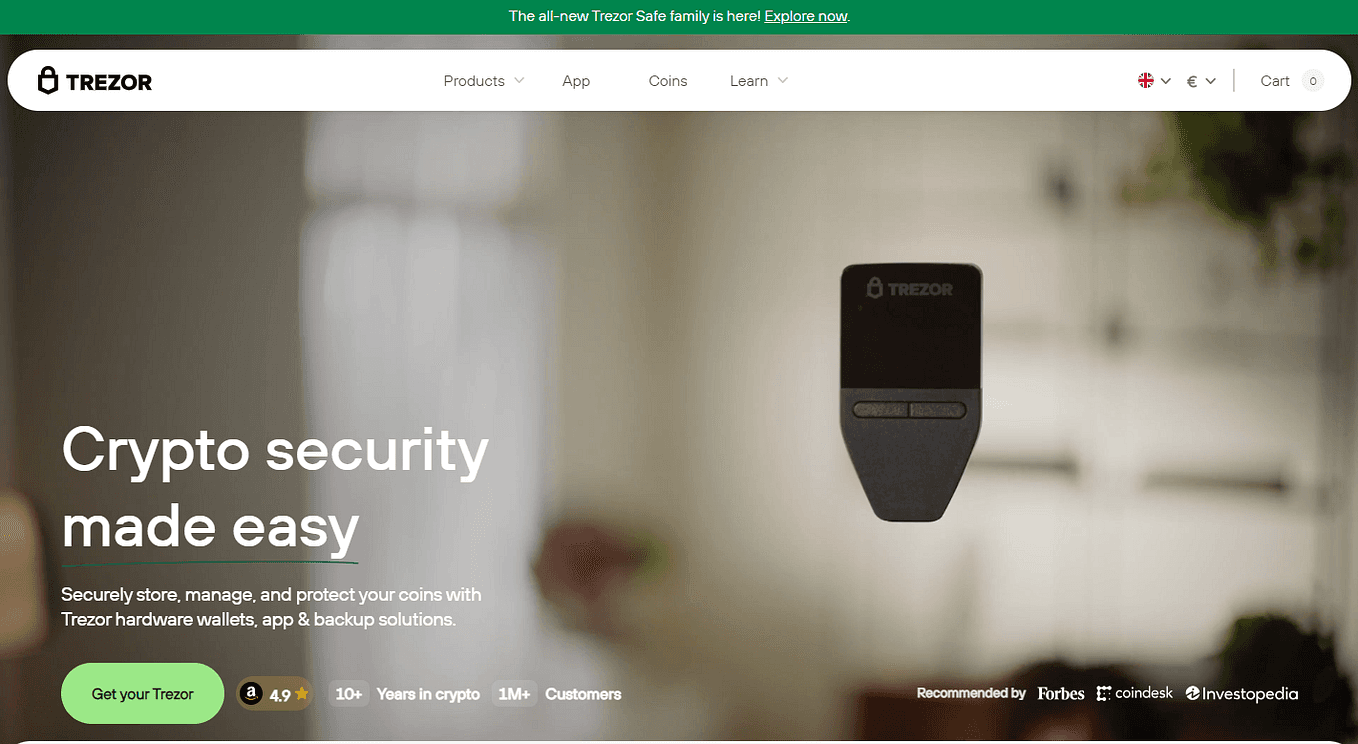
Introduction: What is Trezor and Why Should You Care?
Cryptocurrency is all about control, and with control comes the responsibility of keeping your digital assets safe. If you’ve been into crypto for a while—or are just starting out—you’ll know that one of the biggest worries is keeping your coins secure. Sure, you could store them on an exchange or in a software wallet, but if you really want to make sure your crypto stays safe from hackers, thieves, or even just losing your device, a hardware wallet like Trezor is the way to go.
In this guide, we’re going to show you how to set up your very own Trezor wallet and get started with managing your crypto in a way that’s secure and simple.
What is a Hardware Wallet Like Trezor?
A hardware wallet is a physical device that stores your cryptocurrency keys offline. In other words, instead of keeping your crypto private keys on a device that’s connected to the internet (like a computer or smartphone), they are kept on a physical device that isn’t exposed to the web, making them much harder for hackers to steal. Trezor is one of the most well-known brands in the hardware wallet space.
Trezor comes in two models: Trezor One (the more affordable, simpler version) and Trezor Model T (the higher-end, touch-screen version). Both are excellent choices, but the setup process for both is similar.
Why Should You Use Trezor?
Offline Security: Your private keys are never online.
Multiple Coins Supported: Trezor supports a huge range of cryptos, from Bitcoin to Ethereum to Litecoin and more.
Backup Features: If something happens to your device, your recovery seed lets you get everything back.
Step-by-Step Guide to Setting Up Trezor
So, you’ve got your shiny new Trezor wallet—now it’s time to get it up and running. Here's the breakdown of everything you need to do, starting from Trezor.io/start.
1. Unbox Your Trezor and Get Ready
First things first: unbox your Trezor wallet. Inside, you’ll find:
Your Trezor device
A USB cable
Recovery seed card (this is very important, don’t lose it!)
It’s also a good idea to have a pen and paper nearby, as you’ll need to write down your recovery seed (more on that in a second).
2. Visit Trezor.io/start
Now that you’ve got everything out of the box, go ahead and head to the official Trezor setup site: Trezor.io/start. This is where all the magic happens.
3. Install Trezor Bridge
Once you’re on Trezor.io/start, the website will automatically prompt you to install Trezor Bridge. Trezor Bridge is a small piece of software that helps your Trezor device communicate with your computer or browser. It’s quick and easy to install, so just follow the on-screen instructions.
Tip: Trezor Bridge works on most operating systems (Windows, macOS, Linux), so you don’t have to worry about compatibility.
4. Connect Your Trezor to Your Computer
Once Trezor Bridge is installed, plug your Trezor wallet into your computer using the USB cable that came in the box. The device will power up, and you’ll see a prompt on your computer screen asking you to begin the setup process.
5. Set a PIN for Your Trezor Wallet
Your Trezor will ask you to set a PIN code. This PIN will protect your device from unauthorized access, so choose something secure but easy to remember. It’s important to keep it safe because you’ll need it every time you plug in your Trezor.
Tip: Try to avoid simple numbers like “1234” or “0000”—these are easy to guess.
6. Generate Your Recovery Seed
This is where it gets serious. Trezor will generate a recovery seed for you. This is a list of 12, 18, or 24 words that will serve as a backup to recover your wallet in case you lose your device or it gets damaged.
Write it down: Write down your recovery seed on paper. DO NOT save it on your phone, computer, or in any digital form. A hacker could easily access it that way.
Store it safely: Store the paper somewhere safe, like in a lockbox or safe, to keep it away from potential damage or theft.
Never share it: The recovery seed is the key to your crypto. If anyone gets their hands on it, they can access your funds.
You’ll need to confirm your recovery seed by selecting the words in the right order. This is to make sure you’ve written it down correctly.
7. Set Up Additional Security Options (Optional)
Once you’ve secured your PIN and recovery seed, Trezor will give you some extra options to enhance your wallet’s security. One option is to add a passphrase. This adds another layer of protection, requiring you to enter the passphrase along with the PIN to unlock your wallet.
Note: If you forget your passphrase, your wallet could become locked permanently, so make sure to store it securely.
8. Finish Setup and Sync with Trezor Wallet Interface
After your device is set up, you can start using it to manage your cryptocurrency. You can sync it with the official Trezor Wallet Interface, which is available in your browser. You’ll be able to manage all your cryptocurrencies here—send, receive, and check your balance, all while keeping your keys securely offline.
Managing Your Cryptos on Trezor
Now that you’ve set up your wallet, here’s how to manage your cryptocurrencies:
1. Receiving Crypto
To receive cryptocurrency, go to the “Receive” tab in the Trezor Wallet interface. You’ll get a unique wallet address that you can share with anyone sending you crypto. Double-check the address to make sure it’s correct before sharing it.
2. Sending Crypto
When you want to send cryptocurrency, go to the “Send” tab. Enter the recipient’s address and the amount you want to send. You’ll then have to confirm the transaction on your Trezor device, which ensures that only you can authorize it.
3. View Your Balance
You can see the balance of your crypto directly in the “Accounts” section of the Trezor Wallet interface. Your available balance will be displayed in whichever cryptocurrency you’ve selected.
Keeping Your Trezor Safe: Tips & Tricks
Security is key when it comes to your crypto, and Trezor makes it easy to protect your funds. Here are a few tips to ensure your wallet stays safe:
1. Protect Your Recovery Seed
Your recovery seed is your backup. If you lose it, you risk losing access to your crypto. Store it in a safe place, and don’t share it with anyone.
2. Enable Two-Factor Authentication (2FA)
For extra security, enable 2FA wherever possible, such as on exchanges you use or other services. This adds an extra layer of protection for your accounts.
3. Keep Software Up to Date
Trezor regularly releases firmware updates that help improve security. Make sure to check for updates and install them when prompted.
4. Be Cautious of Phishing
Be cautious about phishing attempts. Always double-check URLs, and only use official websites like Trezor.io to access your wallet.
Trezor vs. Other Wallets: Why Choose Trezor?
There are plenty of other hardware wallets out there, but Trezor stands out for several reasons:
Reputation: Trezor is one of the most trusted names in the industry.
Wide Support: It supports a huge range of cryptocurrencies.
User-Friendly: The setup process is straightforward, and the interface is easy to use.
Security: With features like PIN protection, recovery seeds, and passphrases, Trezor takes security seriously.
Conclusion: Start Protecting Your Crypto Today
Setting up your Trezor wallet through Trezor.io/start is a fast, easy way to get started with securing your cryptocurrency. By following these simple steps, you’ll have a secure wallet ready to store your digital assets safely. Remember, keeping your recovery seed safe is crucial, so store it wisely, and you’ll have peace of mind knowing your crypto is protected.